BLACKMORE

A Korean saju & portrait experience

Born in Joseon,
who would you have been?

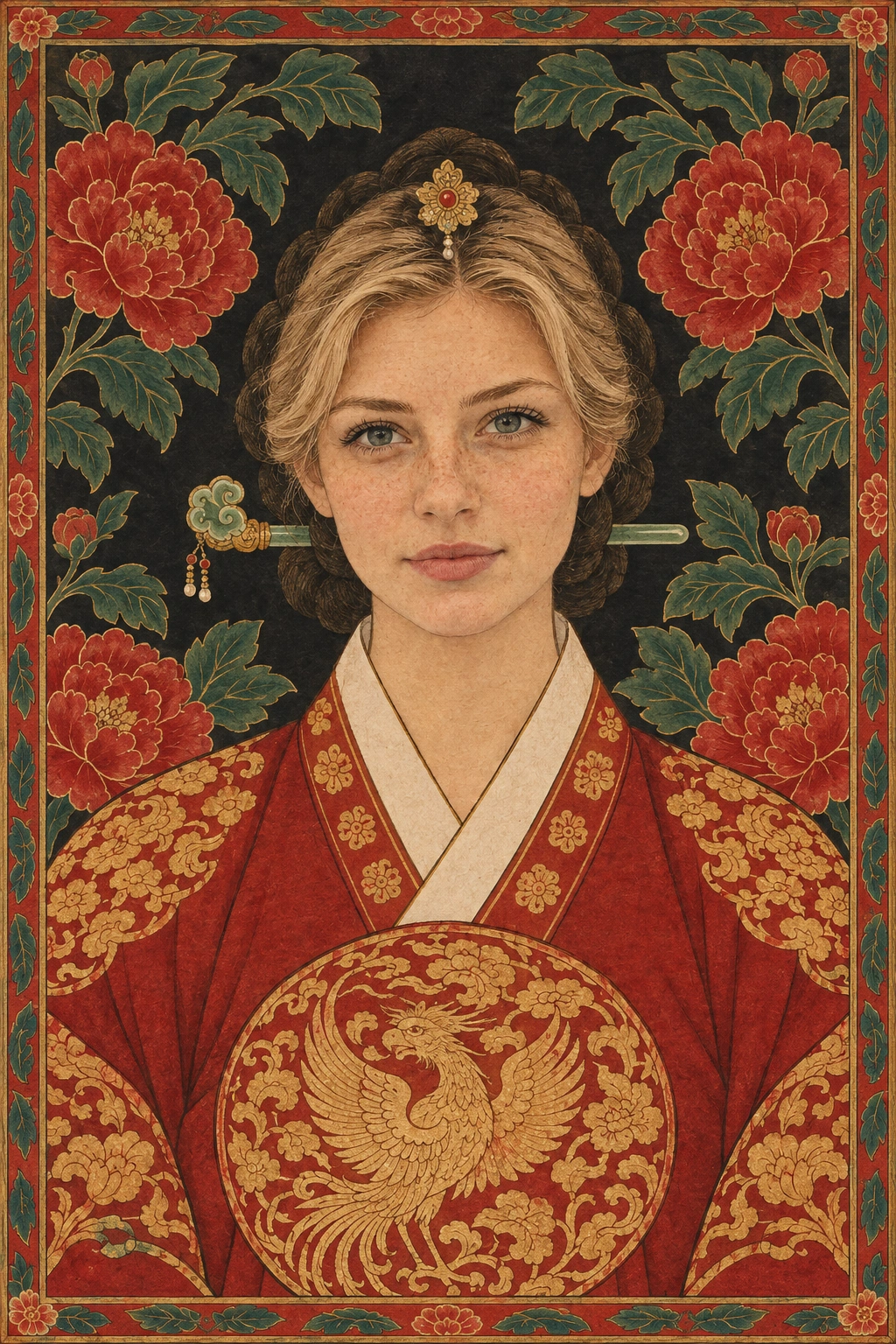
Your selfie becomes a Joseon portrait. Discover the station Heaven draws for you and the story your saju tells.

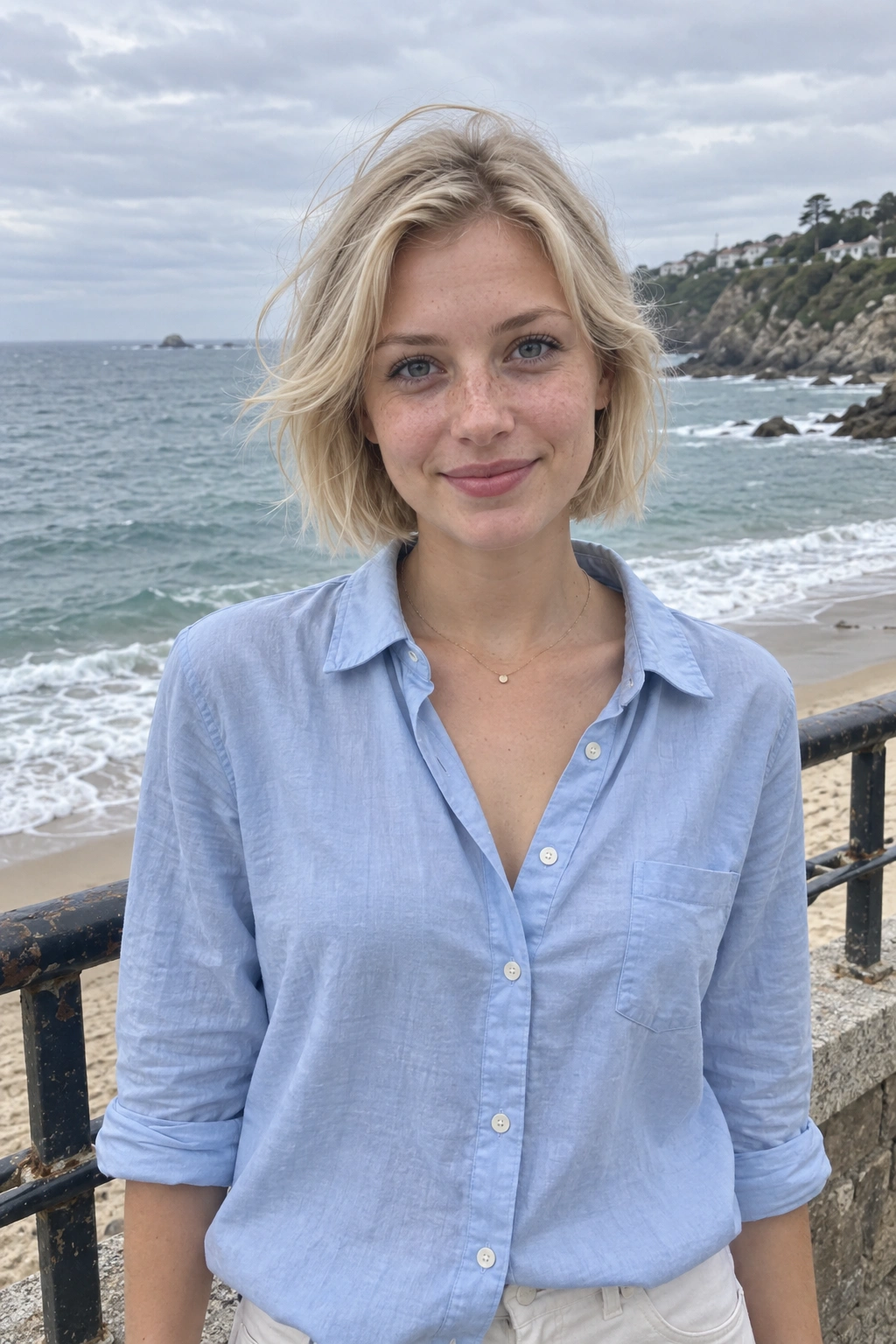
OriginalJoseon portrait
Minhwa · Folk-painting style
Read my saju — free

No photo, no sign-up — your four pillars and a free preview of your reading, right now.

New to saju? Start here

Saju is a Korean tradition that reads the year, month, day and hour of birth. Here it sets your portrait’s colors and atmosphere, while Heaven draws your Joseon station from your birth date. Enjoy it as a cultural story, not a claim about your actual past life.

Portrait style gallery

One face. Three Joseon portraits.

Your saju picks the colors. The station Heaven drew picks the clothes.

A letter from Joseon

Where did Heaven seat you?

One of twenty stations, from Sovereign or Queen Dowager down to beggar, is sealed in this letter.

The stations Heaven draws — out of every hundred births

The station Heaven drew for youEnter your birth details. One of these twenty is already yours.

The throne card comes up once in 100 draws. Two cards lie face down — once in 50 draws each.

One of these twenty

  • Sovereign · Queen DowagerOne word, and it’s law.once in 100 draws

Your station is revealed the moment you open the letter. Heaven does not ask twice — the same birth date, birth time, sex and birthplace always land in the same station (solar or lunar, the same day counts the same).

Read your free saju, and the letter arrives still sealed.Read my saju — free

Your Joseon self, painted from your own face

One portrait, a face reading and your six scores — all from one photo and your birth date.

Card layout sample. The person, birth chart and scores are illustrative.
Read the card’s saju record in larger text

Key readings from the card above. This sample uses an advertising portrait and illustrative birth details.

Your station in Joseon

Chief Censor

You were born as fine rain that soaks in without a sound.

Your face, by the old book

A face for a full table.

Where these two lines come from

The jaw, from one corner to the other, is 0.86 times the width of the face. Among the 101 AI-made faces we compare against, about 5 in 100 have a wider jaw. The Shenxiang Quanbian, a classical manual of face reading, says a broad jaw means wealth (頷骨闊者富). Both lines on this card come from this feature.

These measurements come from this sample portrait. The faces we compare them with are 101 faces we also made with AI — not real people.

Year
癸卯Yin Water Rabbit
Month
甲寅Yang Wood Tiger
Day
癸卯Yin Water Rabbit
Hour
戊午Yang Earth Horse

What the birth chart suggests

The Expression structure — it revolves around what you make and say

A day master that draws on the strength around it

The current chapter

Ages 58–67 · Yang Earth Monkey (戊申)

A time of ending. What is going will go. Letting go is what makes room for what comes next.

The next chapter

From age 68 · Yin Fire Goat (丁未)

A time of storing. Things go inward. Nothing shows outside, and that chafes.

Five elements

Wood
4
Fire
1.5
Earth
1.8
Metal
none
Water
2

Your six scores

Letters
72/99
Wits
90/99
Virtue
7/99
Force
32/99
Fortune
12/99
Favor
78/99
Read a sample face reading

Below is a sample face reading for a fictional person different from the one on the card above. Your results will depend on your reference face, and any feature too hard to make out is left out.

Shapes observed on the reference face

Averaged across both eyes, your outer corners tilt upward 9.3 degrees from the inner corners. In the old book these are not just eyes: the left is the sun, the Great Yang, and the right is the moon, the Great Yin. In that picture, your sun and moon turn upward at the outer edge.

Source passage

『欽定古今圖書集成』 藝術典 第632卷 · 神相全編二

二曰眉為保壽官 · 眼為日月之象 / 五星六曜說 · 太陽…〈左眼〉 / 五星六曜說 · 太陰…〈右眼〉

From between your brows to the base of your nose is 1.21 times the stretch from there to the tip of your chin, so the middle part of your face is the longer one. Top to bottom, the old face readers gave a face three realms: heaven at the forehead, humankind at the nose, earth at the chin. On your face, the human realm runs longer than the earth realm.

Source passage

『欽定古今圖書集成』 藝術典 第632卷 · 神相全編二

三才三停論 · 額為天…鼻為人…頦為地

The corners of your mouth sit higher than its center. One chapter of the old book, the Discourse on the Five Features that carries Bodhidharma’s name, sketches a mouth it admired in two strokes: corners that turn up without baring the teeth, like a bow, and a wide mouth that gathers in neatly at its ends, like the sea. Your corners turn the way the bow does.

Source passage

『欽定古今圖書集成』 藝術典 第632卷 · 神相全編二

達摩五官總論 · 海口仰弓形 / 達摩五官總論 · 大而有收拾為海角。朝上而不露齒曰弓

The opening of your eyes is 0.39 times as tall as it is wide. Every feature has an office in the old book, and the eyes are the inspector. The eye it prized was long and narrow: the phoenix eye, drawn out toward the temple. That was judged by looking, never by measuring, so we give the ratio and no verdict.

Source passage

『欽定古今圖書集成』 藝術典 第632卷 · 神相全編二

監察官 · 或細長極寸 / 三曰目為監察官 · 長如鳳目 / 三曰目為監察官 · 鳳目細長入鬢

Your eyebrows run longer than your eyes — 1.53 times their length. To the old face readers the brow was the ruler and the eye its minister, and their ideal face had brows running long past the eyes, like wild geese in a line. On length alone, yours lean that way.

Source passage

『欽定古今圖書集成』 藝術典 第632卷 · 神相全編二

二曰眉為保壽官 · 眉為君,目為臣,宜清長過目,宜如雁行

Your mouth is 1.32 times as wide as your nose at the nostrils — the wider of the two. The mouth keeps the accounts in the old book: what comes in, what goes out. On its map of the face as China’s four great rivers, the mouth is the Huai River. The hope was for a mouth square and broad, the lips closing over and holding each other up. On width alone, yours leans that way.

Source passage

『欽定古今圖書集成』 藝術典 第632卷 · 神相全編二

四瀆 · 口為淮…要方闊而脣吻相覆載 / 出納官 · 須要方大

That is your face the way the old book would draw it. The book went on to read good and ill fortune into these shapes; we stop at the pictures. We do not use these shapes to judge personality or the course of a life. Four limits. What the old readers judged by eye — the grain of the brows, the light in the eyes, the fullness of the lips — is not measured. Where they divided the face is not exactly where we measured. The corners of your mouth were measured on the reference face, which we draw unsmiling to show the shape rather than an expression, so they sit lower than in a photo where you are smiling. And the angles and lengths were taken after allowing for how far your head was tipped up or down, so a ruler laid on the photo may read a little differently. Then there is the portrait: this same face, painted in the robes of your Joseon station.

How this differs from other saju readings

  • We write a day in Joseon, with you as the lead.
  • Your birth hour, set by the sun where you were born.
  • Checked against the classical texts, with 300 charts recalculated independently.
Learn more
Timed by the sun where you were born
Seoul and Busan see the sun rise at different times. We correct your birth time by the longitude of your birthplace, and roll back daylight saving where it applied, before setting your eight characters.
Structures read by the Ziping Zhenquan
The rules for reading a chart’s structure follow the Ziping Zhenquan. Other parts have their own classic — the season’s heat and cold follow the Qiongtong Baojian, the twelve life stages and the void branches the Sanming Tonghui — and each was checked against the original text.
We independently recalculated 300 charts
We took 300 charts at random — leaving out births within two days of a solar-term change and in the 11 pm–1 am hour — and recalculated them with the classical tables, separately from our engine. For the month and hour pillars we checked only the heavenly stems; within that scope, the day pillar, the order of the ten-year luck cycles, the structure, the twelve life stages of the current luck cycle and year, and the void branches matched in every field.
Woven into one person’s story
We pick out what matters most in your saju — work, resources, relationships, timing and more. Then a fictional story imagines how you, with the qualities explored in your reading, might live a day in Joseon.

Three doors into Joseon

Start with your free reading. The Eight, The Two of You and Face & Chart are all ready in English.

The Eight and The Two of You need only birth details; Face & Chart adds one photo.

In Korea, a single in-person saju consultation commonly runs ₩30,000–100,000 (about US$20–70).

The Eight 四柱帖

Who were you in Joseon?

No photo · birth details only

  • The station Heaven drew for you, and a day lived in it — plus, if you pick a question, a page that answers it from your chart

Prices in US dollars. The launch price ends at 11:59 pm Korea time (KST) on Dec 19.

Read the first part free

The Two of You 宮合

What connects the two of you?

Partners · friends · family · colleagues

  • How your two charts meet — and whether theirs holds an element yours lacks

Free to start · Full bookPrices in US dollars. The launch price ends at 11:59 pm Korea time (KST) on Dec 19.

Compare our charts

Readings are for entertainment — not predictions or advice.

So — who were you, in Joseon?

Start with your birth details and read your saju for free, then open The Eight, The Two of You or your Face & Chart portrait in English.

Meet my Joseon self

Readings are for entertainment — not predictions or advice.